
Climate change is no longer just an environmental issue—it is rapidly becoming a global security threat. Rising temperatures, extreme weather, and shrinking natural resources are increasing tensions worldwide. But how exactly does climate change lead to war?
Let’s break it down in simple terms.
What Is the Link Between Climate Change and Conflict?
Climate change acts as a “threat multiplier.” It doesn’t directly cause wars, but it worsens existing problems like poverty, political instability, and resource shortages—making conflicts more likely.
1. Resource Scarcity: The Root of Conflict
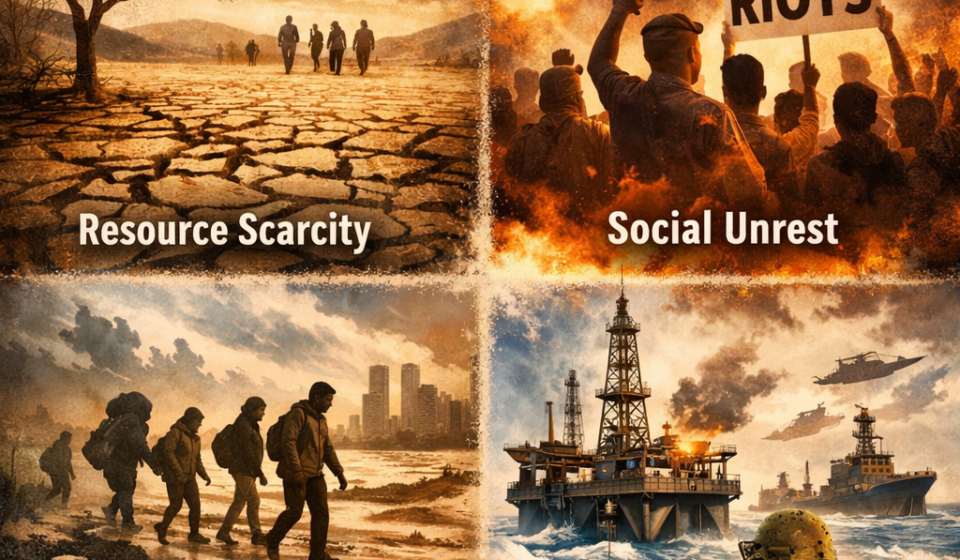
One of the biggest ways climate change leads to war is through scarcity of essential resources like water, food, and land.
-
Droughts reduce water supply
-
Crops fail due to extreme heat
-
Livestock dies due to lack of grazing land
As resources become limited, communities and nations begin to compete.
👉 For example, disputes over the Nile River involving Egypt, Sudan, and Ethiopia highlight how water scarcity can increase tensions.
2. Food Shortages and Rising Prices
Climate change disrupts agriculture, leading to:
-
Poor harvests
-
Rising food prices
-
Hunger and malnutrition
When people cannot afford food, social unrest grows quickly.
👉 The Arab Spring is often linked to rising food prices and drought conditions, which triggered protests across multiple countries.
3. Climate Migration and Refugee Crises
As regions become uninhabitable due to:
-
Flooding
-
Heatwaves
-
Desertification
Millions of people are forced to move.
This leads to:
-
Overcrowded cities
-
Pressure on jobs and infrastructure
-
Increased ethnic and social tensions
These factors can spark conflict both within and between countries.
4. Weak Governments and Political Instability
Climate change puts pressure on governments, especially in developing nations.
-
Lack of resources weakens governance
-
Public dissatisfaction increases
-
Armed groups exploit instability
👉 For instance, prolonged drought conditions in Syria contributed to economic hardship before the civil war began.
5. Competition for New Resources
Ironically, climate change also creates new opportunities—and new conflicts.
-
Melting ice in the Arctic is opening new shipping routes
-
Countries are competing for oil, gas, and mineral resources
This geopolitical competition increases the risk of future conflicts.
The Bigger Picture: A Chain Reaction
Climate Change → Resource Shortage → Economic Stress → Migration → Political Instability → Conflict
Conclusion
Climate change is reshaping the global landscape in ways we are only beginning to understand. While it may not directly start wars, it creates the conditions where conflict becomes more likely.
Addressing climate change is not just about saving the planet—it’s about preventing future wars and ensuring global stability.