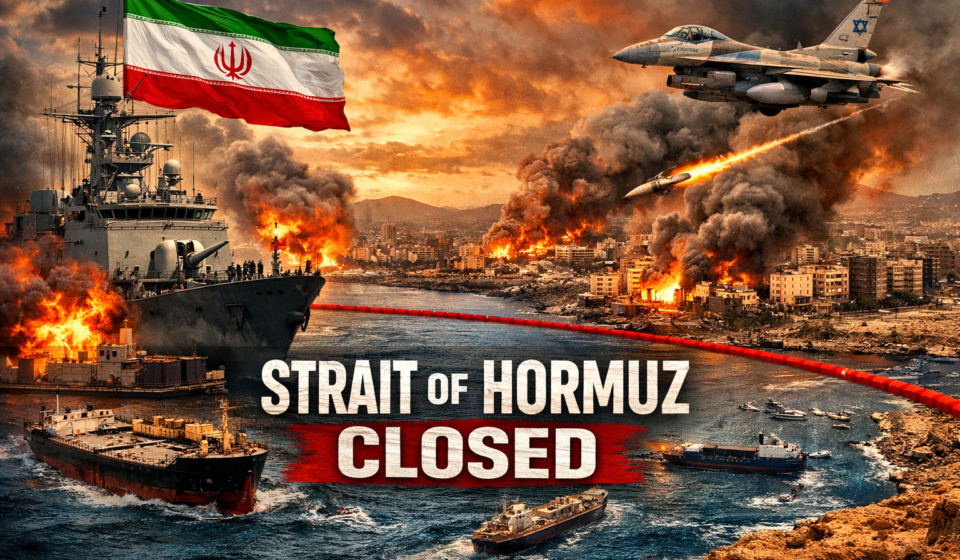

The Middle East is once again at the center of global attention as tensions escalate following Iran’s decision to shut down the Strait of Hormuz. This dramatic move came just hours after a fragile ceasefire was announced, raising serious concerns about regional stability, global oil supply, and the risk of a wider conflict.
The situation intensified after fresh Israeli airstrikes targeted areas in Lebanon, reportedly aimed at weakening Hezbollah. Iran, a key ally of Hezbollah, responded strongly by halting maritime traffic through one of the world’s most critical energy corridors.
What Triggered the Crisis?
The crisis unfolded rapidly. A ceasefire agreement, reportedly involving Iran and the United States, was expected to de-escalate tensions in the region. However, within hours, Israeli forces launched new strikes in Lebanon, which Iran interpreted as a violation of peace efforts.
Israel has maintained that its military operations specifically target Hezbollah and are not bound by any ceasefire agreement involving Iran. This difference in interpretation has created confusion and heightened tensions across the region.
Iran’s response was swift and strategic. By closing the Strait of Hormuz, it signaled both its displeasure and its capability to disrupt global trade.
Why the Strait of Hormuz Matters
The Strait of Hormuz is not just another waterway—it is the backbone of global energy supply. Located between the Persian Gulf and the Gulf of Oman, this narrow passage handles nearly 20% of the world’s oil shipments.
Every day, millions of barrels of crude oil pass through this route, supplying major economies across Asia, Europe, and beyond. Countries like India, China, and Japan depend heavily on oil transported through this corridor.
Any disruption in this region can trigger immediate spikes in global oil prices, impact fuel costs, and slow down economic activity worldwide.
Global Oil Market Impact
Iran’s decision to shut down the Strait of Hormuz has sent shockwaves through global energy markets. Oil prices have already shown signs of volatility, and experts predict further increases if the situation continues.
For oil-importing countries like India, the impact could be significant. Higher crude oil prices often translate into increased fuel costs, rising inflation, and pressure on government budgets.
Energy companies and shipping firms are also facing uncertainty. Tankers may be forced to reroute or halt operations entirely, leading to delays and increased transportation costs.
Rising Geopolitical Tensions
The situation highlights the fragile nature of geopolitics in the Middle East. The involvement of multiple players—including Iran, Israel, Hezbollah, and the United States—makes the crisis highly complex.
Iran views itself as a defender of regional allies and has consistently opposed Israeli military actions in Lebanon and Syria. On the other hand, Israel sees Hezbollah as a major security threat and continues its operations to weaken the group.
The United States, while supporting Israel, has also been engaged in diplomatic efforts to prevent a broader conflict. However, the latest developments suggest that maintaining peace in the region will be a significant challenge.
Impact on India and Other Economies
For India, the closure of the Strait of Hormuz is particularly concerning. As one of the world’s largest oil importers, India relies heavily on crude oil from the Middle East.
Any prolonged disruption could lead to:
- Increased petrol and diesel prices
- Higher transportation and logistics costs
- Inflationary pressure on essential goods
- Strain on the country’s economic growth
Similarly, other major economies that depend on Middle Eastern oil could face economic headwinds.
Risk of Wider Conflict
One of the biggest concerns is the possibility of the crisis escalating into a broader regional conflict. If tensions continue to rise, other countries in the region may get involved, leading to a larger geopolitical confrontation.
Military analysts warn that any direct conflict involving Iran and Israel could have severe consequences, not just for the Middle East but for global stability.
Additionally, disruptions in shipping routes could extend beyond oil, affecting global trade and supply chains.
Diplomatic Efforts and the Road Ahead
Despite rising tensions, diplomatic efforts are ongoing. International organizations and global powers are urging restraint and encouraging dialogue between the involved parties.
The focus remains on reopening the Strait of Hormuz and restoring normal shipping operations. However, achieving this will require cooperation and compromise from all sides.
The coming days will be crucial in determining whether the situation stabilizes or escalates further.
Conclusion
The closure of the Strait of Hormuz by Iran marks a significant escalation in Middle East tensions. Triggered by Israeli strikes in Lebanon shortly after a ceasefire announcement, this move has far-reaching implications for global energy markets, economic stability, and international security.
As the world watches closely, the need for diplomatic solutions has never been greater. A prolonged crisis could disrupt global oil supply, increase economic uncertainty, and push the region closer to a wider conflict.
For now, all eyes are on how global leaders respond—and whether peace can be restored before the situation spirals further out of control.