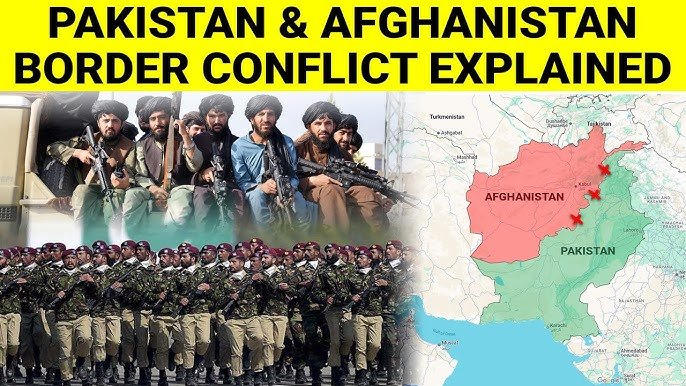
Why Pakistan and Afghanistan Are Fighting: Understanding the Real Reasons Behind the Conflict

Why Pakistan and Afghanistan Are Fighting: Understanding the Real Reasons Behind the Conflict
The relationship between Pakistan and Afghanistan has always been complicated. At times, the two countries have worked together. But often, tensions rise, borders close, trade stops, and violence breaks out. Many people ask: Why are Pakistan and Afghanistan fighting?
The answer is not simple. It involves history, politics, borders, terrorism, and global power struggles. In this article, we will break down the real reasons behind the Pakistan-Afghanistan conflict in clear and simple language.
1. The Durand Line Dispute – The Root of the Problem

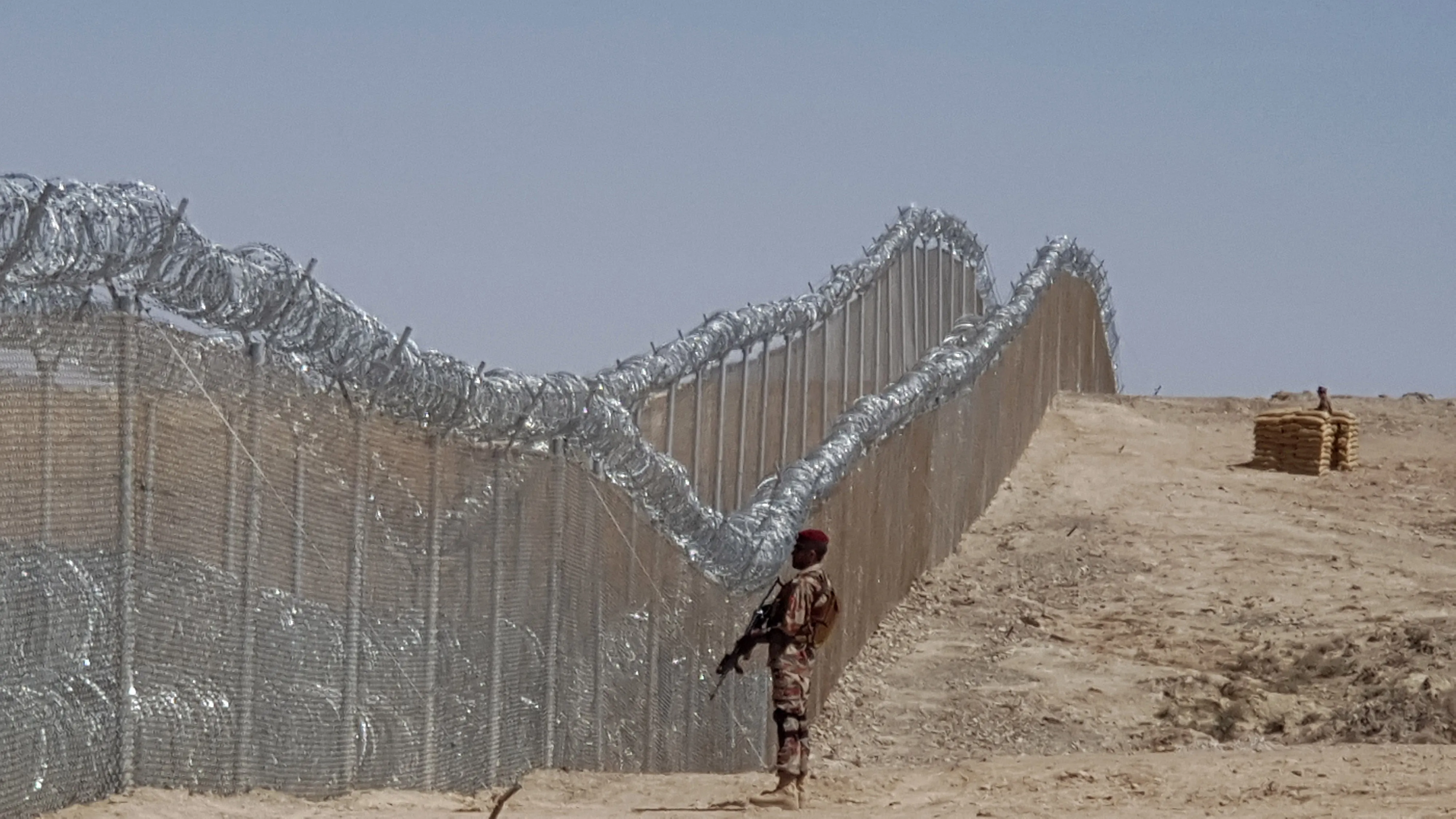

The biggest issue between Pakistan and Afghanistan is the Durand Line.
The Durand Line was drawn in 1893 by British India to separate Afghanistan from what later became Pakistan. Afghanistan has never fully accepted this border.
After Pakistan was created in 1947, Afghanistan argued that the border agreement was made with British India, not Pakistan. Because of this, many Afghan leaders refuse to officially recognize the Durand Line as an international border.
Why This Border Is So Important
-
The border divides Pashtun communities living on both sides.
-
Families, tribes, and businesses exist across the line.
-
Pakistan has fenced most of the border, which Afghanistan strongly opposes.
Whenever Pakistan builds fencing or increases security along the border, tensions rise. Border clashes often happen near crossings like Torkham and Spin Boldak.
2. The Taliban Factor
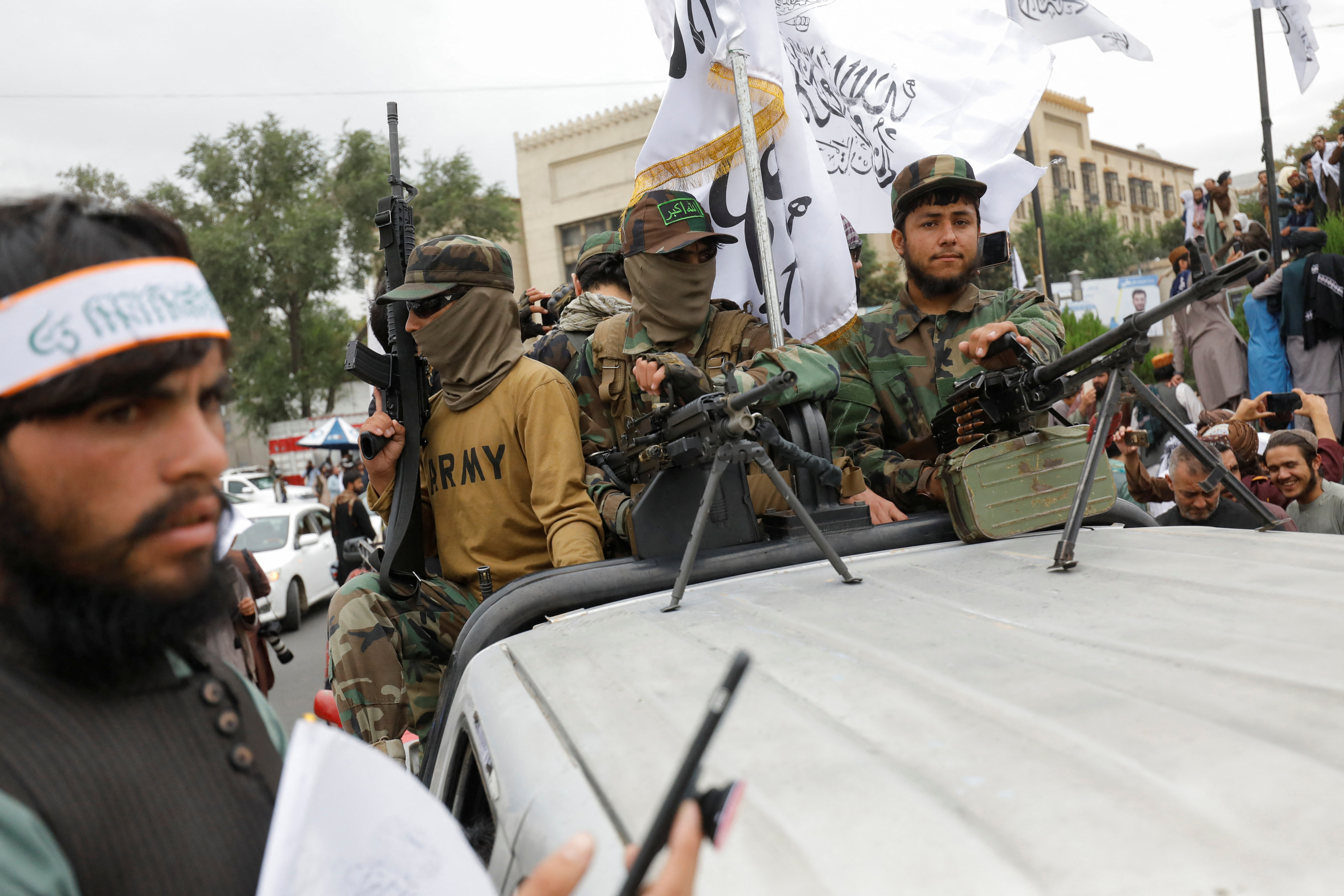
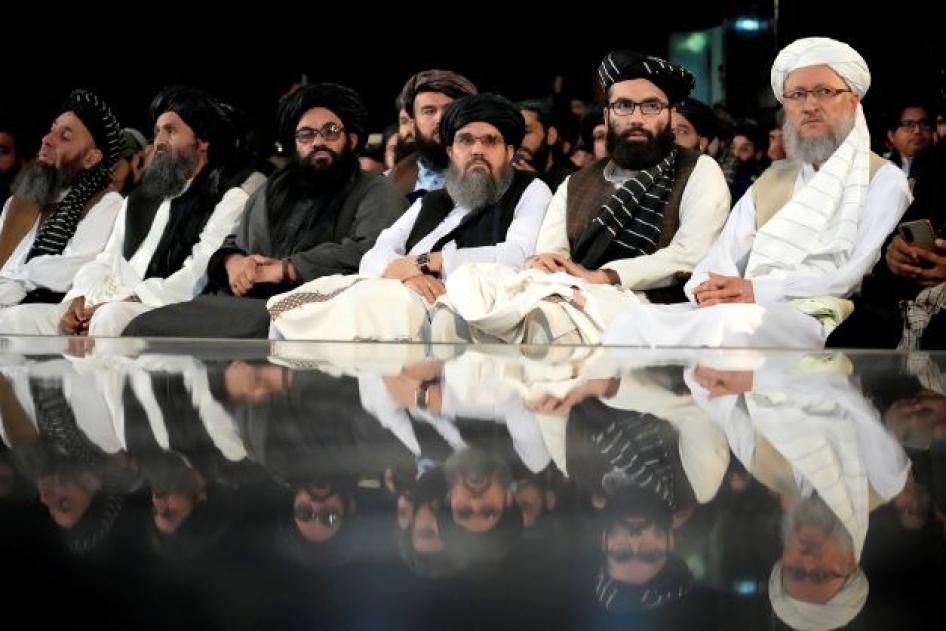

Another major reason behind the conflict is the Taliban issue.
The Taliban returned to power in Afghanistan in 2021 after the United States withdrew its troops. Pakistan was initially seen as having influence over the Taliban. However, relations between Pakistan and the Taliban government have become strained.
Why?
Pakistan accuses Afghanistan of giving shelter to Tehrik-i-Taliban Pakistan (TTP).
The TTP is a militant group that carries out attacks inside Pakistan. Pakistan claims that TTP fighters operate from Afghan territory. The Afghan Taliban deny supporting them, but violence continues.
This creates serious mistrust between the two countries.
3. Terrorism and Security Concerns
Security is a huge concern for Pakistan. Over the years, thousands of people have died in terrorist attacks inside Pakistan. Many of these attacks are blamed on groups operating near the Afghan border.
After the Taliban took control of Afghanistan, Pakistan expected improved security. Instead, cross-border attacks reportedly increased.
Because of this:
-
Pakistan has conducted airstrikes inside Afghanistan.
-
Afghanistan has condemned these actions as violations of sovereignty.
-
Border clashes between forces have intensified.
Each side blames the other, and the situation becomes more tense.
4. Refugee Crisis and Deportations


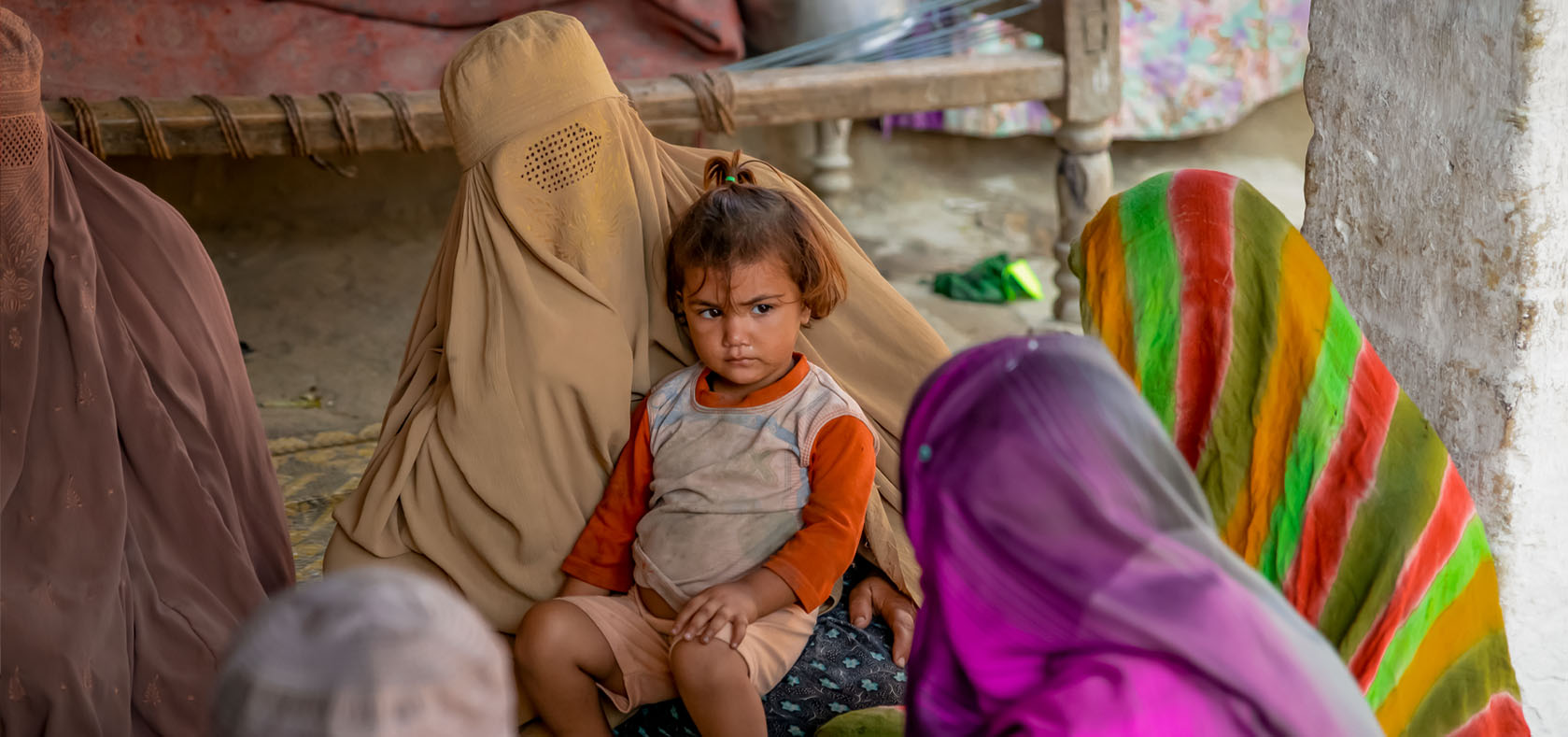
Pakistan has hosted millions of Afghan refugees for over four decades due to wars in Afghanistan.
However, in recent years, Pakistan began deporting undocumented Afghan migrants, saying they were linked to crime and security threats.
Afghanistan strongly criticized these deportations, saying they were unfair and created humanitarian problems.
This refugee issue has further damaged relations between the two countries.
5. Economic and Trade Tensions
Pakistan and Afghanistan depend on each other for trade. Afghanistan uses Pakistani ports like Karachi for imports and exports.
When political tensions rise:
-
Border crossings close.
-
Trade stops.
-
Truck drivers and traders suffer losses.
-
Prices increase in Afghan markets.
Economic pressure often increases political anger. What starts as a border issue can quickly become a trade war.
6. Influence of Global Powers
The conflict between Pakistan and Afghanistan is not just local. It is also influenced by global politics.
United States
The United States played a major role in Afghanistan for 20 years. After its withdrawal in 2021, the power balance changed. Pakistan’s role in supporting peace talks with the Taliban was important, but the post-withdrawal situation created new tensions.
China
The China has economic interests in the region through projects like CPEC (China-Pakistan Economic Corridor). China wants stability, but rising militancy threatens investments.
India
The India also plays a role. Pakistan often accuses India of supporting anti-Pakistan elements in Afghanistan. Afghanistan has had friendly relations with India in the past, which sometimes creates suspicion in Pakistan.
Global competition increases mistrust between the two neighbors.
7. Internal Political Pressure
Both governments face internal challenges.
In Pakistan:
-
Rising terrorism
-
Economic crisis
-
Political instability
Leaders sometimes take strong positions against Afghanistan to show they are protecting national security.
In Afghanistan:
-
International isolation
-
Economic collapse
-
Lack of global recognition
The Taliban government also uses strong statements against Pakistan to gain domestic support.
Internal politics often make compromise difficult.
8. Ethnic and Tribal Dynamics
Many Pashtun tribes live on both sides of the border. These tribal connections are older than both countries.
When violence happens on one side, it affects communities on the other side. Tribal loyalty sometimes becomes stronger than national identity.
This makes border control extremely difficult.
9. Airstrikes and Military Clashes
In recent years, Pakistan has carried out airstrikes targeting militant hideouts inside Afghanistan. Afghanistan has responded with strong condemnation and sometimes return fire.
These military exchanges:
-
Increase civilian casualties
-
Raise anti-Pakistan sentiment in Afghanistan
-
Increase anti-Afghanistan sentiment in Pakistan
This cycle makes peace harder.
10. Is It a Full-Scale War?
Despite clashes, Pakistan and Afghanistan are not in a full-scale war. The conflict is mostly limited to:
-
Border skirmishes
-
Airstrikes
-
Political accusations
-
Trade restrictions
Both countries understand that a full war would damage them severely.
Can Pakistan and Afghanistan Improve Relations?
Yes, but it requires serious effort from both sides.
Possible Solutions:
-
Dialogue over border disputes
-
Joint action against militant groups
-
Intelligence sharing
-
Trade cooperation
-
International mediation
Stability in Afghanistan is important for Pakistan. Similarly, peaceful relations with Pakistan are essential for Afghanistan’s economy.
The Bigger Picture
The Pakistan-Afghanistan conflict is not about one single issue. It is a mix of:
-
Historical border disputes
-
Taliban politics
-
Terrorism
-
Refugee pressure
-
Global power rivalry
-
Ethnic divisions
Each factor adds fuel to the fire.
Understanding these reasons helps us see that this conflict is complex. It cannot be solved by military action alone. It requires political maturity, trust-building, and regional cooperation.
Final Thoughts
The question “Why are Pakistan and Afghanistan fighting?” does not have a simple answer. The Durand Line dispute, Taliban-related tensions, terrorism, refugee issues, and global politics all play a role.
Both countries share history, culture, religion, and deep social connections. But political mistrust and security concerns continue to create conflict.
The future of South Asia depends heavily on peace between Pakistan and Afghanistan. Stability in this region will not only benefit these two nations but also the wider world.
If both sides choose cooperation over confrontation, long-term peace is possible.