
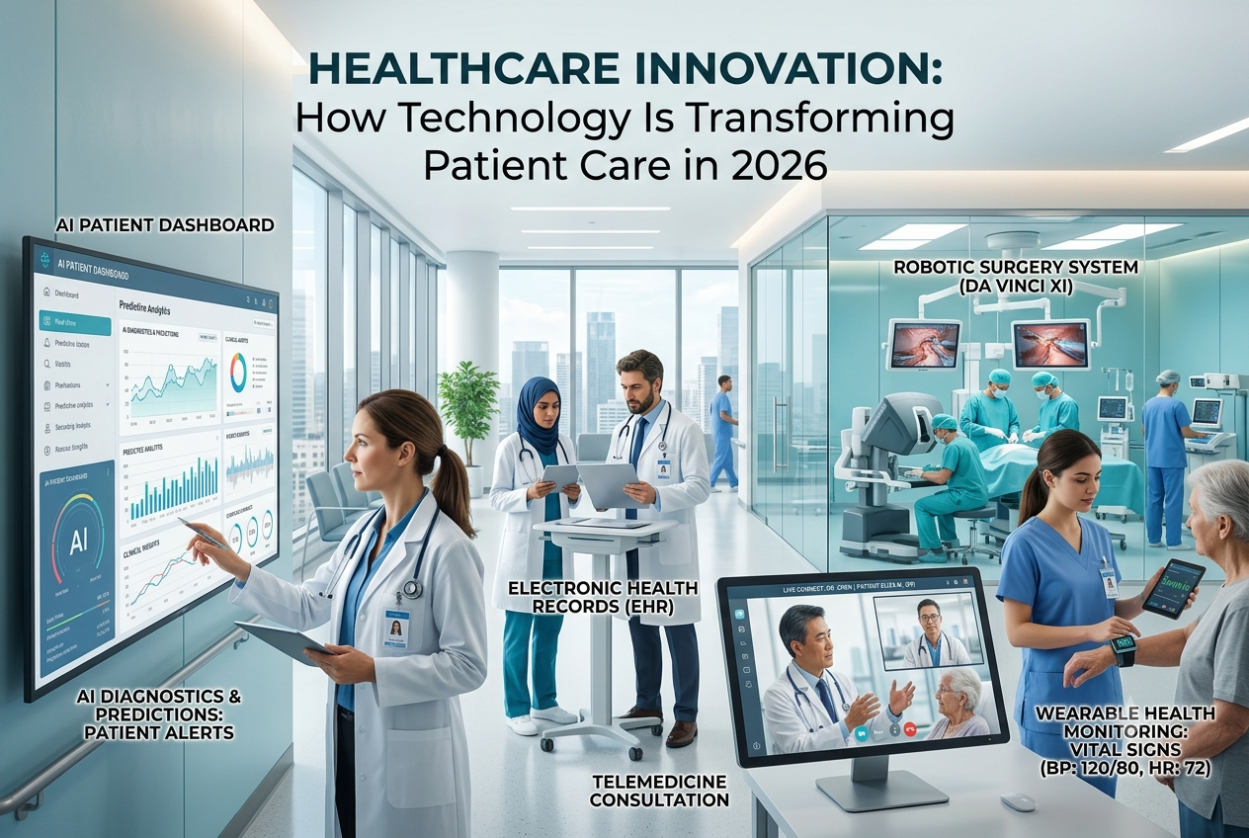

Healthcare innovation is changing the way people receive medical care. From artificial intelligence and telemedicine to wearable health devices and personalized treatments, modern technology is helping doctors diagnose diseases faster, improve patient outcomes, and make healthcare more accessible than ever before.
Today, healthcare innovation is no longer limited to large hospitals or research centers. Patients can now monitor their health from home, consult doctors through video calls, and receive personalized treatment plans based on their medical history. As technology continues to advance, healthcare is becoming smarter, faster, and more patient-focused.
In this article, we’ll explore the latest healthcare innovations, their benefits, challenges, and what the future holds for patients, healthcare providers, and the medical industry.
What Is Healthcare Innovation?
Healthcare innovation refers to the development and adoption of new technologies, medical practices, and digital solutions that improve the quality, efficiency, and accessibility of healthcare services.
It combines medicine with technology to solve healthcare challenges while improving patient experiences.
Examples include:
- Artificial Intelligence (AI)
- Telemedicine
- Electronic Health Records (EHR)
- Wearable health devices
- Robotic surgery
- Personalized medicine
- Remote patient monitoring
- Mobile health applications
The primary goal is simple: deliver better healthcare while reducing costs and improving outcomes.
Why Healthcare Innovation Matters
Healthcare systems around the world face increasing challenges, including aging populations, chronic diseases, and rising healthcare costs.
Healthcare innovation helps address these issues by:
- Improving early disease detection
- Reducing hospital admissions
- Increasing treatment accuracy
- Making healthcare available in remote areas
- Supporting preventive care
- Enhancing patient engagement
- Streamlining hospital operations
These improvements benefit both patients and healthcare professionals.
Artificial Intelligence Is Revolutionizing Healthcare Innovation
Artificial Intelligence has become one of the biggest drivers of healthcare innovation.
AI systems can analyze large amounts of medical data within seconds, helping healthcare providers make informed decisions quickly.
Applications of AI in Healthcare
- Medical image analysis
- Disease prediction
- Drug discovery
- Clinical decision support
- Virtual health assistants
- Hospital workflow automation
Benefits
- Faster diagnosis
- Reduced human errors
- Better patient outcomes
- Improved efficiency
- Lower healthcare costs
For example, AI can identify signs of diseases in medical scans that may be difficult for the human eye to detect.
Telemedicine Makes Healthcare More Accessible
Telemedicine has transformed healthcare by allowing patients to consult doctors remotely.
Using smartphones, tablets, or computers, patients can receive medical advice without visiting a clinic.
Benefits of Telemedicine
- Saves travel time
- Improves healthcare access in rural areas
- Reduces waiting times
- Enables follow-up consultations
- Supports chronic disease management
Telemedicine became widely adopted during the COVID-19 pandemic and continues to play a major role in modern healthcare innovation.
Wearable Devices Support Continuous Health Monitoring
Wearable technology has become an important part of healthcare innovation.
Devices like smartwatches and fitness trackers continuously monitor health indicators.
Common Features
- Heart rate monitoring
- Sleep tracking
- Blood oxygen measurement
- Activity tracking
- Stress monitoring
- ECG monitoring
These devices encourage preventive healthcare by helping users understand their health before serious problems develop.
Personalized Medicine Is Changing Treatment Approaches
Every patient is different, and personalized medicine recognizes that.
Instead of using the same treatment for everyone, doctors can tailor therapies based on:
- Genetics
- Lifestyle
- Medical history
- Environmental factors
This approach increases treatment effectiveness while reducing unnecessary side effects.
Healthcare innovation continues to expand personalized medicine through advances in genetic research and precision healthcare.
Electronic Health Records Improve Patient Care
Electronic Health Records (EHRs) allow healthcare providers to securely store and access patient information.
Advantages
- Faster access to patient records
- Improved coordination among healthcare teams
- Reduced paperwork
- Better treatment decisions
- Lower risk of duplicate tests
Digital records also help patients receive more consistent care when visiting different healthcare facilities.
Remote Patient Monitoring Is Improving Long-Term Care
Remote Patient Monitoring (RPM) enables healthcare professionals to monitor patients outside traditional clinical settings.
Patients use connected medical devices that automatically send health data to healthcare providers.
Common monitoring includes:
- Blood pressure
- Blood glucose
- Heart rate
- Oxygen levels
- Weight management
RPM is especially useful for managing chronic diseases such as diabetes, hypertension, and heart conditions.
Robotic Surgery Improves Precision
Robotic-assisted surgery represents another major advancement in healthcare innovation.
Surgeons use robotic systems to perform minimally invasive procedures with exceptional precision.
Benefits Include
- Smaller incisions
- Less blood loss
- Reduced pain
- Faster recovery
- Lower infection risk
Although robots assist during surgery, experienced surgeons remain fully in control throughout the procedure.
Healthcare Innovation Benefits Patients
Healthcare innovation provides significant advantages for patients.
Better Medical Outcomes
Early diagnosis leads to more successful treatments.
Faster Healthcare Services
Digital tools reduce waiting times and improve hospital efficiency.
Improved Accessibility
Patients in remote locations can access specialists through telemedicine.
Enhanced Patient Engagement
Mobile apps encourage individuals to actively manage their health.
Lower Long-Term Costs
Preventive care and early intervention reduce expensive hospital treatments.
Challenges Facing Healthcare Innovation
Despite impressive progress, several challenges remain.
Data Privacy and Security
Healthcare organizations must protect sensitive patient information from cyber threats.
High Technology Costs
Advanced healthcare systems often require significant investment.
Digital Literacy
Some patients and healthcare professionals need additional training to use new technologies effectively.
Regulatory Compliance
Healthcare innovations must meet strict medical and privacy regulations before widespread adoption.
Future Trends in Healthcare Innovation
The future of healthcare innovation looks promising.
Several technologies are expected to shape the next generation of healthcare.
Artificial Intelligence Expansion
AI will continue supporting diagnosis, treatment planning, and hospital management.
Digital Twins
Virtual models of patients may help doctors predict treatment outcomes before procedures begin.
Smart Hospitals
Connected devices and automation will improve hospital operations.
Genomic Medicine
Genetic testing will enable more personalized treatments.
Advanced Remote Monitoring
Continuous health monitoring will become even more accurate through next-generation wearable devices.
These innovations aim to create healthcare systems that are more efficient, personalized, and accessible.
Practical Tips for Patients
You don’t need to be a technology expert to benefit from healthcare innovation.
Here are a few practical ways to get started:
- Use trusted healthcare apps recommended by your provider.
- Keep your electronic health records updated.
- Consider wearable devices if you manage a chronic condition.
- Explore telemedicine for routine consultations.
- Always protect your personal health information with strong passwords and secure networks.
Small steps can help you take advantage of modern healthcare tools while staying informed about your health.
Conclusion
Healthcare innovation is transforming every aspect of modern medicine. Artificial intelligence, telemedicine, wearable technology, personalized medicine, robotic surgery, and digital health platforms are helping create safer, faster, and more effective healthcare systems.
As these technologies continue to evolve, patients will benefit from improved access to medical care, earlier diagnosis, and more personalized treatment options. While challenges such as data security and implementation costs remain, the future of healthcare innovation is focused on delivering better health outcomes for everyone.
Organizations, healthcare providers, and patients who embrace innovation today will be better prepared for the future of medicine.
Frequently Asked Questions (FAQs)
1. What is healthcare innovation?
Healthcare innovation refers to new technologies, treatments, and healthcare solutions that improve patient care, increase efficiency, and make medical services more accessible.
2. How is artificial intelligence improving healthcare innovation?
Artificial intelligence helps doctors diagnose diseases faster, analyze medical images, predict health risks, support clinical decisions, and improve hospital operations.
3. What are the benefits of telemedicine?
Telemedicine allows patients to consult healthcare professionals remotely, reducing travel time, improving access to specialists, and supporting ongoing care for chronic conditions.
4. Why are wearable devices important in healthcare innovation?
Wearable devices monitor vital health information such as heart rate, sleep quality, physical activity, and blood oxygen levels, helping people manage their health proactively.
5. What is the future of healthcare innovation?
The future includes smarter hospitals, advanced AI systems, personalized medicine, digital twins, remote patient monitoring, and more connected healthcare services that improve patient outcomes while reducing costs.