
Introduction
Consumer Trends 2026 are changing faster than ever before. Technology, economic conditions, environmental concerns, and evolving lifestyles are influencing how people shop, what they buy, and why they choose certain brands. Today’s consumers expect convenience, personalization, transparency, and value in every purchase.
For businesses, understanding these changes is no longer optional. Whether you own a small business, manage an online store, or work in marketing, keeping up with consumer behavior helps you stay competitive and build stronger customer relationships. In this guide, we’ll explore the biggest consumer trends shaping 2026 and explain how businesses can respond successfully.
Why Consumer Trends Matter
Consumer trends represent changes in customer preferences, purchasing habits, and expectations over time.
Understanding these trends helps businesses:
- Improve customer satisfaction
- Develop products people actually want
- Increase customer loyalty
- Stay ahead of competitors
- Make better marketing decisions
Companies that monitor changing consumer behavior can react faster and build long-term success.
Top Consumer Trends 2026
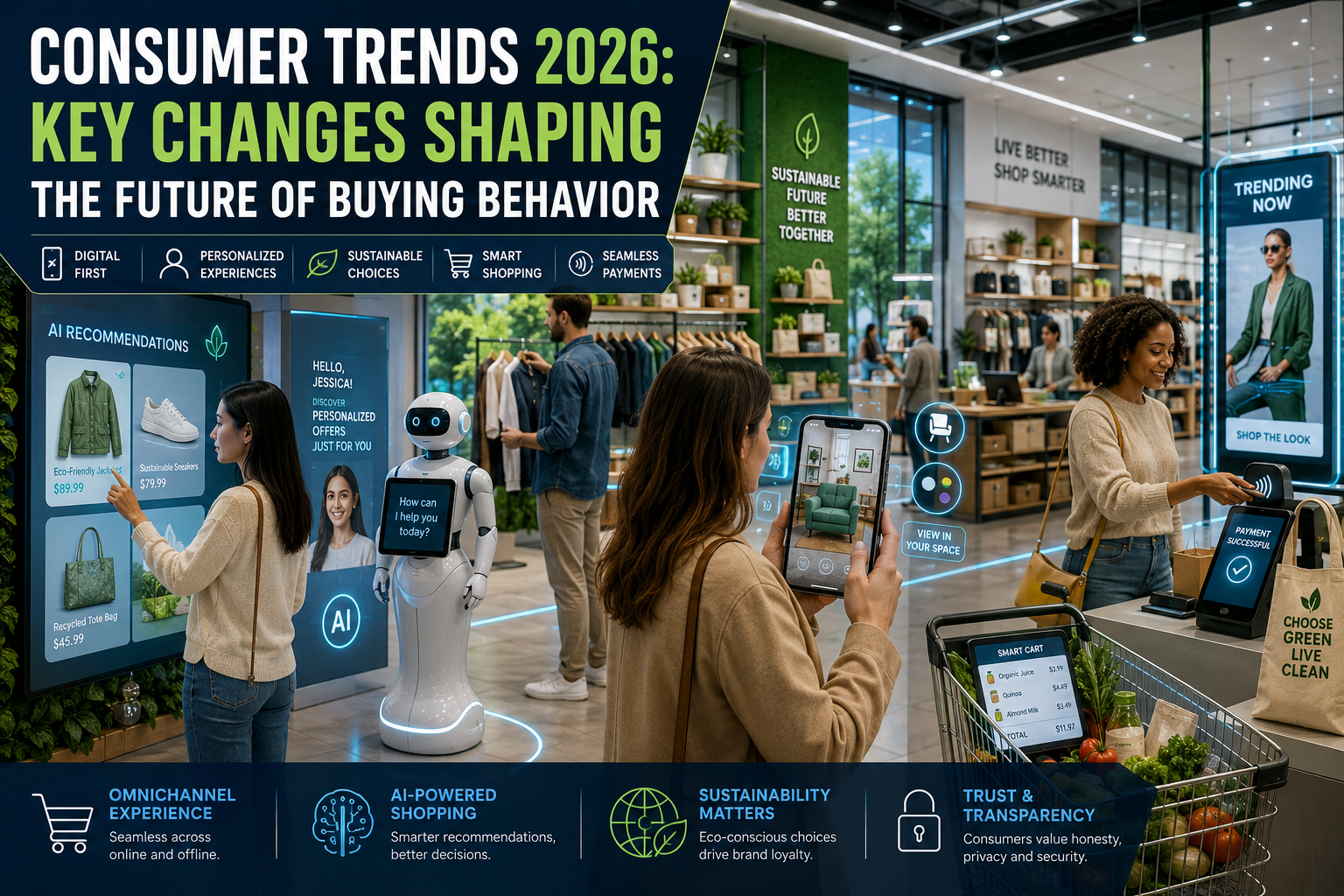
1. Personalized Shopping Experiences Continue to Grow
Today’s consumers expect brands to understand their preferences.
Businesses are increasingly using customer data to recommend products, personalize emails, and create customized shopping experiences.
Examples include:
- Personalized product recommendations
- Customized discounts
- Individual shopping suggestions
- Personalized website experiences
Customers appreciate brands that save them time by showing relevant products instead of endless options.
2. AI is Transforming Consumer Shopping
Artificial intelligence has become part of everyday shopping.
Retailers now use AI to:
- Recommend products
- Answer customer questions
- Predict shopping preferences
- Improve customer support
- Manage inventory efficiently
Many online stores now offer AI-powered virtual assistants that help shoppers find exactly what they need within seconds.
3. Sustainability Influences Buying Decisions
Environmental awareness continues to shape Consumer Trends 2026.
More buyers now consider:
- Eco-friendly packaging
- Sustainable materials
- Ethical manufacturing
- Carbon footprint
- Recyclable products
Consumers are increasingly willing to support brands that demonstrate genuine environmental responsibility.
4. Omnichannel Shopping Becomes the Standard
Customers no longer separate online and offline shopping.
Instead, they expect a seamless experience across:
- Websites
- Mobile apps
- Physical stores
- Social media
- Online marketplaces
For example, a customer may discover a product on Instagram, compare prices on a website, and purchase it in a local store.
Businesses that create consistent experiences across channels often see higher customer satisfaction.
5. Mobile Commerce Keeps Expanding
Smartphones have become the primary shopping device for many consumers.
Mobile shoppers expect:
- Fast-loading websites
- Secure payments
- Easy checkout
- Mobile wallets
- One-click purchasing
Businesses that optimize their websites for mobile users are more likely to increase conversions.
6. Consumers Want Faster Delivery
Fast delivery is now an expectation rather than a luxury.
Popular delivery options include:
- Same-day delivery
- Next-day shipping
- Store pickup
- Scheduled delivery
- Real-time tracking
Convenience often plays a major role in purchasing decisions.
7. Trust and Transparency Matter More Than Ever
Modern consumers carefully research brands before making purchases.
They pay attention to:
- Customer reviews
- Product ratings
- Company values
- Pricing transparency
- Return policies
Brands that communicate honestly are more likely to earn customer loyalty.
8. Subscription Services Continue Growing
Subscription models have expanded beyond entertainment.
Today, consumers subscribe to:
- Beauty products
- Food delivery
- Coffee
- Pet supplies
- Health products
- Software services
Subscriptions offer convenience while helping businesses generate recurring revenue.
9. Social Commerce is Becoming Mainstream
Social media has evolved into a shopping destination.
Consumers now discover and purchase products directly through social platforms.
Popular social commerce activities include:
- Live shopping events
- Influencer recommendations
- Product demonstrations
- Short-form videos
- In-app purchases
Businesses are investing more in engaging content rather than traditional advertisements.
10. Health and Wellness Continue to Influence Spending
Consumers increasingly prioritize products that support healthier lifestyles.
Growing categories include:
- Organic foods
- Fitness equipment
- Mental wellness products
- Nutritional supplements
- Smart health devices
This trend continues to create opportunities across multiple industries.
Key Factors Driving Consumer Trends 2026
Several forces are shaping modern buying behavior.
Technology Innovation
Artificial intelligence, automation, and digital payments make shopping easier than ever.
Economic Conditions
Consumers are comparing prices more carefully and seeking better value.
Environmental Awareness
Sustainable products continue gaining popularity.
Digital Transformation
Online shopping, mobile commerce, and digital services remain central to consumer lifestyles.
Changing Demographics
Younger generations bring different shopping preferences and higher expectations for digital experiences.
Real-World Examples of Consumer Trends
Many global companies have already adapted successfully.
A clothing retailer may recommend products based on previous purchases.
A grocery chain may offer same-day delivery through a mobile app.
A cosmetics brand may use AI to recommend skincare products based on customer preferences.
An electronics retailer may allow customers to buy online and collect their purchases in-store.
These examples demonstrate how businesses improve customer experiences while increasing sales.
Common Challenges Businesses Face
Keeping up with Consumer Trends 2026 is rewarding but not without challenges.
Some common obstacles include:
- Rapid technological change
- Rising customer expectations
- Increased competition
- Data privacy regulations
- Supply chain disruptions
Businesses that stay flexible and continue learning are better positioned to overcome these challenges.
Future Outlook
Consumer expectations will continue evolving as technology advances and lifestyles change.
Future developments may include:
- More AI-powered shopping assistants
- Greater personalization
- Faster delivery options
- Increased demand for sustainable products
- Enhanced virtual shopping experiences
- Smarter retail technology
Companies that embrace innovation while focusing on customer needs will remain competitive in the years ahead.
Conclusion
Consumer Trends 2026 highlight a clear shift toward convenience, personalization, sustainability, and digital experiences. Today’s consumers expect brands to deliver value while providing seamless shopping journeys across every channel.
Businesses that understand these changing behaviors can improve customer satisfaction, strengthen loyalty, and drive long-term growth. By staying informed and adapting to new consumer expectations, organizations can build stronger relationships with customers and remain successful in an increasingly competitive marketplace.
Frequently Asked Questions
1. What are Consumer Trends 2026?
Consumer Trends 2026 refer to the latest changes in customer buying behavior, preferences, and expectations influenced by technology, sustainability, and digital innovation.
2. Why are consumer trends important for businesses?
Understanding consumer trends helps businesses develop better products, improve customer experiences, increase sales, and remain competitive.
3. How does AI affect Consumer Trends 2026?
AI supports personalized recommendations, faster customer service, smarter inventory management, and more efficient shopping experiences.
4. Why is sustainability becoming a major consumer trend?
Many consumers prefer environmentally responsible brands that use sustainable materials, ethical manufacturing practices, and recyclable packaging.
5. How can businesses prepare for future consumer trends?
Businesses should invest in personalization, improve digital experiences, optimize for mobile users, embrace sustainability, and continuously monitor changing customer behavior to stay competitive.
Tags: Consumer Trends, Buying Behavior, Customer Experience, Digital Shopping, Sustainability, Personalization, AI in Retail, Consumer Insights, E-commerce, Market Trends